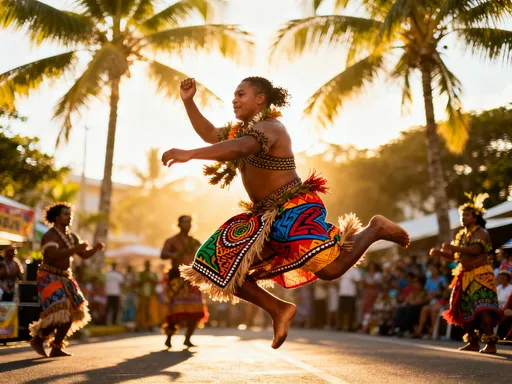
You Won’t Believe How Alive Varna’s Culture Feels Until You Dance in the Square
I didn’t go to Varna for beaches or bars—I went for the soul of the city, and wow, did I find it. From spontaneous folk dances in the plaza to centuries-old rituals by the Black Sea, Varna doesn’t just show its culture—it pulls you into it. This isn’t a place you watch from the sidelines. You clap, you sway, you taste, you *feel*. If you’re craving real connection through tradition, let me take you where the culture breathes.
Arrival: The First Pulse of Varna’s Cultural Rhythm
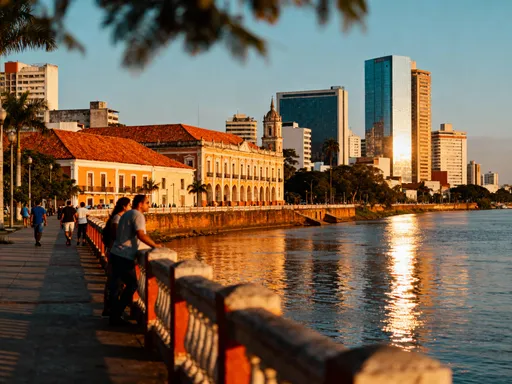
Stepping off the train at Varna’s central station, one is immediately met with a rhythm that pulses beneath the surface of the city’s seaside charm. The air carries a blend of salt and roasted coffee, mingling with the faint echo of accordion music drifting from a nearby café. Along the boulevard, locals stroll with purpose and ease, greeting one another with warm nods and laughter that lingers in the late afternoon sun. This is not a city performing for visitors; it’s living, breathing, and inviting you to walk at its pace. The Sea Garden unfurls like a green ribbon along the coast, where elderly couples play chess beneath ancient plane trees and children chase pigeons near fountains adorned with mythological carvings.
What strikes the observant traveler is the seamless blend of Varna’s dual identity—resort destination and cultural guardian. While beach umbrellas dot the shoreline in summer, just a short walk inland, cobblestone lanes reveal remnants of Roman walls and Ottoman-era mosques. The city does not hide its layered past; it celebrates it. Historical markers sit unassumingly beside modern art installations, and public squares host both weekend markets and open-air exhibitions about ancient Thracian tribes. This coexistence creates a sense of continuity, as though every generation has left a thread in the city’s ongoing story.
The urban layout itself encourages deep engagement. Unlike cities designed solely for transit, Varna rewards slowness. The seaside promenade gradually gives way to narrow alleys where laundry hangs between pastel-colored buildings and the scent of baking bread spills from open doorways. These transitions are not abrupt but organic, guiding visitors from tourist hubs into residential neighborhoods where daily life unfolds without pretense. It’s here, in the quiet corners between main streets, that one begins to sense the heartbeat of Varna—not in grand gestures, but in the unhurried rhythm of people tending gardens, sharing stories on benches, or pausing to watch the sunset over the Black Sea.
The Heartbeat of Tradition: Varna’s Folklore in Motion
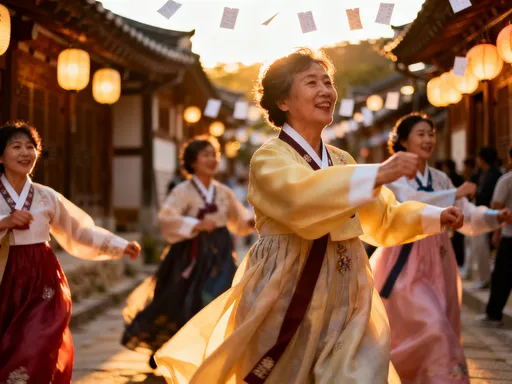
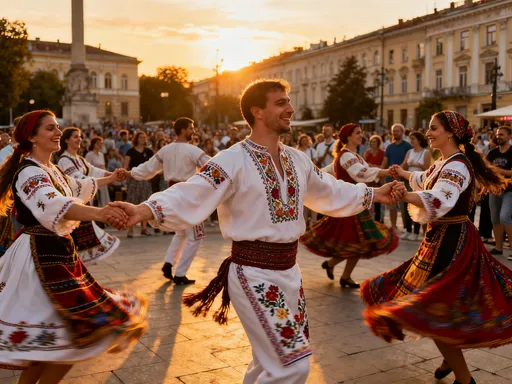
As evening falls during the summer months, the Eighth Fort—a restored 19th-century defensive structure—transforms into a living stage for Bulgaria’s rich folk traditions. Under the soft glow of lanterns strung between stone arches, local dance ensembles take their places in the central courtyard. Women in embroidered woolen skirts and men in white linen shirts with intricate vests begin a dance that has been passed down through generations. The movements are precise—quick stomps, synchronized turns, arms linked in unity—each step carrying the weight of history and regional pride. This is not theatrical reenactment; it is cultural preservation in motion, performed by people for whom these dances are not performances but expressions of identity.
Music is never far from daily life in Varna. In the mornings, the low drone of the *gaida*, Bulgaria’s traditional bagpipe, can be heard near the Cathedral of the Assumption, where street musicians play during market hours. By afternoon, the rhythms shift—drum circles form spontaneously near the Opera House, drawing in passersby who clap along or even join in with improvised instruments. Children mimic the beats on buckets, elders nod in recognition, and tourists pause, phones in hand, not just to record but to absorb. These moments are not staged for visitors; they emerge naturally from a community that values sound as much as silence, celebration as much as reflection.
What makes Varna’s cultural scene truly transformative is its insistence on participation. In many cities, tradition is observed from a distance—behind glass, behind ropes, behind etiquette. But in Varna, clapping is expected, swaying is welcomed, and when someone offers you their hand to join a circle dance, refusal feels like turning away from connection itself. There is no hierarchy between performer and audience; instead, there is shared energy. This inclusivity breaks down barriers that often separate travelers from locals. A woman from Ohio finds herself laughing beside a grandmother from a nearby village, both out of breath but exhilarated. In these moments, language fades, and something deeper takes its place—a universal understanding forged through rhythm and movement.
Sacred Spaces and Living History: Museums That Speak
At the heart of Varna’s cultural narrative lies the Archaeological Museum, home to one of the most significant discoveries in European prehistory: the Varna Necropolis. Unearthed in 1972, this burial site contains the world’s oldest processed gold, dating back more than 6,500 years. Standing before the delicate gold beads, scepters, and pendants displayed in glass cases, one is struck not only by their craftsmanship but by what they represent—a complex, spiritually rich society long before the rise of classical civilizations. The museum does not present these artifacts as mere relics; it frames them as proof of early human creativity, social hierarchy, and belief systems. For the thoughtful traveler, this collection reshapes assumptions about the origins of culture in Europe.
Equally compelling is the Ethnographic Museum, housed in a restored 19th-century merchant’s home. Here, history is not confined to labels and timelines but experienced through the senses. Stepping inside, visitors are enveloped by the earthy scent of aged wood and wool, the same materials used in traditional rural homes. Rooms are recreated to reflect different regions of Bulgaria—Thrace, Dobrudzha, the Rhodope Mountains—each with authentic furnishings, handwoven textiles, and tools used in daily life. A loom sits mid-use, as if the weaver stepped away only moments ago. Nearby, a video loop shows an elder demonstrating the process of spinning flax, her hands moving with practiced ease. These details create intimacy, making the past feel not distant but deeply personal.
What sets Varna’s museums apart is their narrative approach. Rather than overwhelming with dates and academic jargon, they tell stories—of a bride preparing for her wedding, of a farmer marking the seasons, of a village coming together for harvest festivals. Interactive displays invite touch and exploration, and docents often share family anecdotes alongside historical facts. This storytelling ethos ensures that visitors don’t just learn about culture—they feel its continuity. A mother from Canada whispers to her daughter, “This is how my grandmother lived,” even though they’ve never been to Bulgaria. The connection is emotional, not geographical. In Varna, museums are not mausoleums of the past; they are living rooms of collective memory.
Flavors That Tell Stories: A Culinary Walk Through Varna
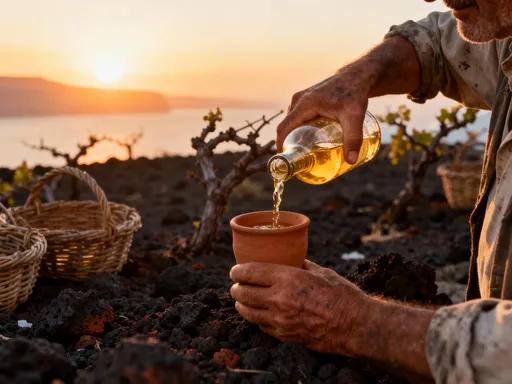
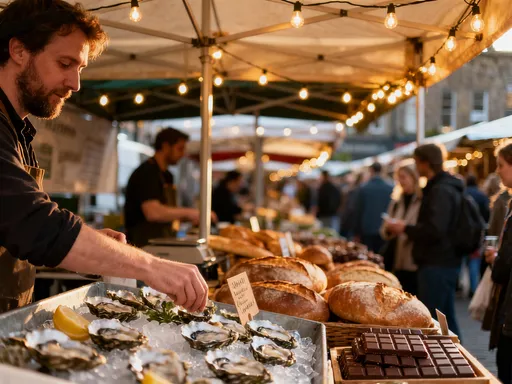
To understand Varna’s culture, one must begin at the market. At Zhana Market, the city’s largest and most vibrant, the day starts before sunrise. Vendors arrange pyramids of sun-dried peppers, baskets of wild mountain herbs, and wheels of *sirene* cheese wrapped in cloth. The air hums with conversation—bargaining, joking, catching up on family news. A woman offers a sample of homemade *rakia*, the clear fruit brandy that flows like water at celebrations. “Try it,” she says with a smile. “This one has apricot. My husband made it.” These exchanges are not transactions; they are micro-moments of hospitality, each bite and sip a doorway into someone’s world.
Dining in Varna is never rushed. At a family-run *mehana*—a traditional Bulgarian tavern—meals unfold over hours. The table fills with shared plates: *kavarma*, a slow-cooked stew of meat and vegetables; *shopska salad*, crisp and bright with tomatoes and cucumbers; *banitsa*, a flaky pastry layered with cheese and egg. Each dish comes with a story. The owner might explain how *kavarma* was once cooked in clay pots over open fires during winter gatherings, or how *banitsa* is traditionally served on New Year’s Eve with a coin hidden inside for luck. These details transform food from sustenance into ritual, linking taste to tradition.
What stands out is the role of meals as social anchors. Lunch is not a break but an event, often stretching into the late afternoon. Strangers are welcomed at communal tables, especially during festivals or religious holidays. A solo traveler might find herself seated beside a retired teacher and a young couple celebrating an anniversary, all sharing wine and stories as if they’ve known one another for years. This openness is not performative; it stems from a cultural value that places relationships above efficiency. In a world increasingly dominated by speed and isolation, Varna’s dining culture feels like a gentle rebellion—a reminder that nourishment is not just physical but emotional, not just individual but collective.
Seasonal Rhythms: Festivals That Define the Year
Varna’s calendar is marked not just by dates but by rhythms—of nature, of history, of community. The Varna Summer International Jazz Festival, held each July along the seaside promenade, exemplifies this blend of global and local. World-renowned musicians perform under the stars, their melodies carried by sea breezes to thousands of listeners seated on blankets and folding chairs. Yet this is not a sterile concert experience. Between sets, local dancers take the stage, and food trucks serve *kebapcheta* and grilled cheese. The festival does not import culture—it integrates it, ensuring that international sounds coexist with Bulgarian pride.
Lesser-known but equally meaningful is the Day of Culture, celebrated each May across the city. Schools prepare for weeks, with children learning traditional songs and dances from their grandparents’ regions. On the big day, parks and squares come alive with performances, craft fairs, and art installations made by students. One year, a primary school transformed a small plaza into a living map of Bulgaria, using flowers, fabric, and painted stones to represent each region’s symbols. These events are not for tourists; they are for the community, yet they remain open and welcoming to all. A visitor might find herself clapping along to a children’s choir or trying her hand at egg decorating, a traditional Easter craft.
What makes these festivals enduring is their connection to deeper cycles. Many are rooted in agricultural traditions—harvest celebrations, spring rituals, midsummer bonfires—adapted to modern life without losing their essence. Even secular events often include nods to spiritual heritage, such as blessings by local priests or the lighting of candles in memory of ancestors. This continuity ensures that tradition is not preserved in a vacuum but lives and evolves. For families raising children in a digital age, these moments offer grounding, a way to pass on identity through shared experience rather than textbooks. For travelers, they provide rare access to culture not as spectacle but as lived reality.
Behind the Scenes: Meeting the Keepers of Culture
Beyond the festivals and museums are the quiet guardians of Varna’s heritage—artisans, elders, teachers—who dedicate their lives to keeping traditions alive. In a small workshop near the old town, a potter shapes clay using techniques unchanged for centuries. His hands move with instinctive precision, forming vessels that echo those found in the Varna Necropolis. “We don’t make these for sale,” he says. “We make them because someone must remember.” His daughter, a university student, joins him on weekends, learning not just the craft but the stories behind each pattern—the spiral for eternity, the zigzag for lightning, the sun symbol for life.
Elsewhere, in a community center funded by local donations, a group of women gather weekly to embroider traditional costumes. Each stitch carries meaning: red for protection, white for purity, green for growth. One woman explains that her grandmother taught her the patterns during long winter nights, and now she teaches them to her granddaughter. “It’s not just about the clothes,” she says. “It’s about the time we spend together, the songs we sing while we work.” These sessions are not classes but gatherings, where tea is poured, memories are shared, and culture is transmitted through presence, not curriculum.
Perhaps most moving is the work being done with youth. At a municipal cultural school, retired musicians volunteer to teach children how to play the *kaval*, a wooden flute, and the *tupan*, a large double-headed drum. The lessons are free, open to all, and held in a sunlit room with photos of past ensembles on the walls. “We don’t expect them to become professionals,” says the coordinator, a former orchestra conductor. “We just want them to know where they come from.” These efforts reflect a quiet resilience—a refusal to let modernity erase memory. In a coastal city shaped by tourism and change, these acts of preservation are not grand declarations but daily commitments, rooted in love and responsibility.
How to Travel Deeper: Practical Tips for Authentic Connection
To experience Varna as more than a postcard requires intention. One of the simplest yet most effective choices is accommodation. Instead of international hotel chains, consider family-run guesthouses in neighborhoods like Asparuhovo or Saharne. These homes often include breakfast with homemade jams and yogurt, and hosts are eager to share tips—where to find the best *banitsa*, which beach has the clearest water, when the next village fair is happening. These conversations, born of genuine hospitality, open doors that guidebooks cannot.
Transportation also shapes experience. While taxis are convenient, taking the public tram along the coast offers a different perspective. Locals board with grocery bags, dogs on leashes, or children in strollers, creating a rhythm of everyday life. Walking is even more revealing. A route from the Sea Garden through the Old Town to the Roman Thermae allows travelers to move through layers of history and community. Pause at a neighborhood bakery, browse a small bookstore, sit on a bench where retirees play backgammon. These moments, unscripted and unhurried, foster connection far more than any guided tour.
Timing is equally important. Visiting during weekly markets, religious holidays like St. George’s Day, or local workshops—such as bread-baking demonstrations or folk instrument lessons—ensures that culture is witnessed in its natural flow. These events are not produced for tourists; they are part of life. Even a simple walk on a Sunday morning reveals families attending church, then gathering for long lunches, their laughter spilling into the streets. By aligning one’s schedule with the city’s rhythm, the traveler shifts from observer to participant, not through force but through presence.
Conclusion
Varna’s magic isn’t in postcard views—it’s in the moments when you’re no longer an observer but part of the story. By slowing down, opening up, and stepping into the rhythm, travelers don’t just see culture—they live it. And that changes everything. It reshapes how we think about heritage, not as something preserved behind glass but as something breathed, danced, and shared. In Varna, tradition is not a performance for outsiders; it is a living current, strong and warm, inviting all who are willing to step in. Whether through the clink of glasses over *rakia*, the pull of a hand into a circle dance, or the quiet pride in a handmade embroidery, the message is clear: culture is not meant to be watched. It is meant to be lived. And in Varna, it lives beautifully, authentically, and without pretense.