You Won’t Believe How Stockholm Merges Nature and Culture
Stockholm isn’t just a city of museums and cafés—its soul lives where forest meets water, and tradition blends with wilderness. I was stunned by how seamlessly culture flows into nature here. From ancient fishing villages to modern eco-habits, every green space tells a story. This is more than scenery; it’s a way of life that Swedes cherish daily. The city doesn’t impose itself on the landscape—it grows from it, shaped by centuries of respect for the natural world. In Stockholm, nature isn’t a weekend escape; it’s woven into the rhythm of everyday life, from morning commutes through pine forests to summer evenings spent foraging for berries on public land. This deep connection between people and place defines the city’s identity.
The City That Grows From the Forest
Stockholm’s urban design reflects a rare harmony between built environments and untouched nature. Unlike most major cities that flatten terrain to fit grids, Stockholm embraces its geography. Built across 14 islands connected by over 50 bridges, the city follows the contours of bedrock, waterways, and forested inlets. Residential neighborhoods rise gently from granite outcrops, with homes nestled among pine and birch trees rather than displacing them. Green corridors stretch through the city, allowing wildlife to move freely while giving residents direct access to nature. These are not afterthoughts—they are foundational to how Stockholm functions.
This integration is no accident. Since the early 20th century, city planners have prioritized preserving natural spaces within urban development. The Green Map of Stockholm, first developed in the 1990s, outlines protected areas, walking paths, and ecological zones, ensuring that growth does not come at the expense of greenery. Today, nearly 40% of the city’s land area consists of parks, forests, and nature reserves. More remarkably, 80% of residents live within 300 meters of a green space. This proximity means that walking or biking through woodland is as common as strolling down a city street.
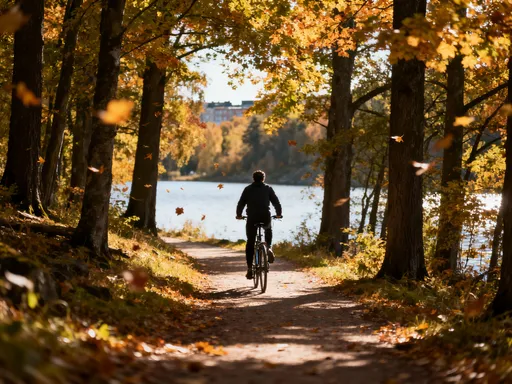
The cultural significance of this layout cannot be overstated. For Swedes, being close to nature is not a luxury—it is a necessity. The concept of friluftsliv, meaning “free air life,” captures this ethos: a belief that time spent outdoors is essential for physical and mental well-being. In Stockholm, this philosophy shapes daily routines. Parents push strollers along forest trails even in winter, office workers eat lunch on park benches beneath leafy canopies, and students study under trees during mild afternoons. Nature is not something to be visited occasionally; it is a constant companion.
Moreover, the city’s architecture often blurs the line between indoors and outdoors. Many homes and public buildings feature large windows facing green spaces, rooftop gardens, and outdoor seating year-round. Public transportation routes are designed to pass through scenic areas, turning commutes into quiet journeys through forest and water. Even the subway system, often called the world’s longest art gallery, incorporates natural elements—exposed rock walls in stations remind riders that they are traveling beneath a living landscape. This seamless flow between city and wilderness reflects a cultural value: that human life should exist in balance with, not dominance over, nature.
Archipelago Life: Culture on the Water’s Edge
Just beyond Stockholm’s skyline lies one of Europe’s most extensive archipelagos—a sprawling chain of over 30,000 islands, islets, and skerries stretching into the Baltic Sea. This vast maritime landscape is not just a natural wonder; it is a living cultural region where seasonal rhythms, family traditions, and sustainable living converge. For generations, Swedes have maintained summer cottages, known as sommarstugor, across these islands. These simple wooden homes, often without electricity or running water, serve as retreats from urban life and as anchors of intergenerational connection.
Every summer, thousands of Stockholmers migrate to the archipelago, arriving by ferry, private boat, or even kayak. The journey itself is part of the experience—passing rocky shores, silent coves, and red-painted cottages perched on granite cliffs. Once there, life slows. Days revolve around fishing, swimming, wood gathering, and cooking over open fires. Children learn to row, identify edible seaweed, and navigate by the stars. These practices are not romanticized—they are real, functional skills passed down through families. The archipelago is not a theme park of rural life; it is a continuation of it.
Many of these islands have been inhabited for centuries. Fishing villages like Grinda, Värmdö, and Möja preserve historic building styles, boat-making techniques, and local dialects. Some communities still rely on traditional methods of preservation, such as salting herring or smoking fish, which are then shared at seasonal gatherings. The annual crayfish party, or kräftskiva, often takes place in archipelago settings, where friends and families gather around lakeside tables, wearing paper hats and singing songs while feasting on boiled crayfish, bread, and schnapps. These events are not staged for tourists—they are authentic expressions of community and seasonal celebration.
The archipelago also plays a crucial role in environmental education. Local organizations offer guided tours focused on marine conservation, birdwatching, and sustainable boating practices. Schools in Stockholm frequently organize field trips to the outer islands, where students learn about biodiversity, tidal patterns, and the impact of climate change on coastal ecosystems. This hands-on engagement ensures that younger generations grow up with a deep respect for the sea and its resources. The archipelago, therefore, is not only a place of leisure but also a classroom, a sanctuary, and a cultural archive.
Royal Parks With a People’s Spirit
Stockholm’s parks are not merely decorative green spaces—they are democratic institutions with royal origins. Djurgården, one of the city’s most beloved recreational areas, was once a royal hunting ground reserved for the Swedish monarchy. Established in the 15th century, it remained off-limits to the public for centuries until King Charles XIV John opened it in the 1800s. Today, it is a vibrant hub where locals jog, cycle, skate, and picnic beneath centuries-old trees. Similarly, Humlegården, originally a royal garden, now welcomes thousands of visitors annually who come to read, play chess, or simply relax in the shade.
What sets these parks apart is their dual identity: they honor history while serving contemporary life. Djurgården is home to world-class institutions like the Vasa Museum, Skansen open-air museum, and the ABBA Museum, yet none of them overshadow the natural environment. Paths wind through meadows and forests, allowing visitors to move effortlessly between culture and nature. It is common to see families biking from an exhibit on Viking ships to a lakeside swim, or tourists pausing after a museum visit to feed ducks or gather wildflowers. The park does not feel curated—it feels lived-in.
Seasonal events further transform these spaces into stages for cultural expression. In summer, outdoor concerts draw crowds to open-air amphitheaters, where classical music, folk bands, and jazz ensembles perform under the trees. Winter brings ice skating rinks, lantern-lit walks, and Christmas markets that blend tradition with sustainability—many vendors use biodegradable packaging and locally sourced ingredients. These gatherings are not commercial spectacles; they are community-driven, often organized by neighborhood associations or volunteer groups.
Citizens take pride in protecting these green spaces. Grassroots initiatives regularly organize clean-up days, tree planting, and habitat restoration projects. Schools adopt sections of parks for environmental monitoring, teaching children about soil health, insect populations, and plant species. This sense of ownership fosters a culture of stewardship—residents don’t just use the parks; they care for them. As a result, Stockholm’s green lungs remain healthy, accessible, and deeply integrated into the social fabric.
Foraging: Where Nature Feeds Tradition
In few places does the bond between culture and nature become as tangible as in the Swedish practice of foraging. Mushroom picking and berry hunting are not niche hobbies—they are national traditions embraced by people of all ages and backgrounds. Every autumn, forests around Stockholm fill with families carrying woven baskets, scanning the ground for chanterelles, porcini, and blueberries. This activity is made possible by allemansrätten, the “right to roam,” a legal principle enshrined in Swedish custom that grants public access to most uncultivated land.
Allemansrätten is more than a law—it is a social contract based on respect, responsibility, and trust. It allows anyone to walk, camp, or pick wild plants on private land, provided they do not disturb wildlife, damage property, or take more than personal use requires. This freedom is not abused; it is honored. Swedes are taught from childhood to leave no trace, to avoid protected areas, and to harvest sustainably. As a result, foraging remains a viable and cherished practice, contributing to food security and cultural continuity.
The knowledge passed down through generations includes how to identify edible species, when they ripen, and how to prepare them. Grandparents teach grandchildren to distinguish between safe mushrooms and toxic look-alikes. Recipes for lingonberry jam, cloudberries with cream, and dried chanterelle soup are staples in Swedish households. These foods are not exotic delicacies—they are everyday ingredients, deeply tied to seasonal rhythms and family memories.
Foraging also plays a role in modern sustainability efforts. With growing awareness of food miles and packaging waste, many Stockholmers view wild harvesting as an eco-friendly alternative to supermarket shopping. Local markets often feature vendors selling foraged goods, and restaurants incorporate wild ingredients into seasonal menus. Educational workshops on ethical foraging are widely available, promoting both safety and environmental awareness. In this way, an ancient survival skill has evolved into a contemporary expression of cultural identity and ecological responsibility.
Eco-Conscious Living as Cultural Identity
Sustainability in Stockholm is not a recent trend driven by global pressure—it is a way of life rooted in geography, history, and shared values. The city consistently ranks among the most environmentally advanced in the world, not because of top-down mandates alone, but because green habits are culturally embedded. Recycling is nearly universal, with households sorting waste into multiple categories: paper, plastic, metal, organic, and hazardous materials. Public composting stations are common, and many apartment buildings have centralized sorting rooms designed for efficiency and cleanliness.
Transportation reflects the same ethos. Cycling infrastructure is extensive, with dedicated lanes, secure parking, and traffic signals timed for bike flow. Over 15% of all trips in the city are made by bicycle, and the number rises in warmer months. Public transit is powered largely by renewable energy, and electric buses are increasingly common. Car ownership is relatively low, especially in central areas, where parking is limited and congestion charges apply. These systems work because they are supported by public consensus—not enforced compliance.
Energy use in homes also follows sustainable principles. District heating, which recycles waste heat from industry and power generation, warms over 90% of buildings in Stockholm. New constructions must meet strict energy efficiency standards, and many include solar panels, green roofs, and rainwater collection systems. Even in older neighborhoods, residents invest in insulation, energy-efficient windows, and smart thermostats to reduce consumption.
But perhaps the most significant aspect of Stockholm’s eco-culture is mindset. Environmental care is not seen as sacrifice—it is seen as common sense. Parents teach children to turn off lights, repair clothes, and reuse containers. Schools integrate sustainability into curricula, from science classes to art projects. Community gardens, repair cafes, and clothing swaps thrive across the city, fostering a culture of reuse and connection. This collective consciousness did not emerge overnight; it grew from a deep-seated understanding that the land provides, but only if respected.
Seasonal Rhythms That Shape Daily Life
In Stockholm, time is measured not just by clocks but by light, temperature, and natural cycles. The city experiences extreme seasonal variation—long, dark winters with only a few hours of daylight, and bright, almost endless summers where the sun barely sets. These shifts profoundly influence daily routines, social habits, and cultural traditions. Rather than resisting these changes, Swedes embrace them, structuring their lives around nature’s rhythm.
Winter is a time of introspection and warmth. With daylight scarce, homes are lit with candles, and evenings are spent indoors with family. The tradition of mys—a sense of coziness and comfort—guides this season. People gather for coffee and pastries, read books, knit, or watch films. Yet even in winter, outdoor life continues. Ice skating on frozen lakes, cross-country skiing through forest trails, and winter swimming in icy waters are common. The annual Lucia festival, held in early December, brings communities together with candlelit processions, singing, and saffron buns, offering light and hope during the darkest days.
Summer, in contrast, is a burst of energy and celebration. With up to 18 hours of daylight, Stockholmers maximize their time outdoors. Parks fill with picnickers, rooftops become gathering spots, and outdoor cafes buzz late into the evening. Midsummer, one of the most important holidays, marks the peak of this season. Communities erect maypoles, dance traditional folk dances, wear flower crowns, and enjoy pickled herring, new potatoes, and strawberries. These festivities are not commercialized—they are deeply personal, often held in private gardens or archipelago cottages.
The transition between seasons is itself a cultural milestone. Spring brings valborg, or Walpurgis Night, when bonfires are lit to welcome warmer weather. Autumn is for harvesting, preserving, and preparing for winter. These cyclical traditions create a strong sense of continuity and belonging. They are not performed for show; they are lived experiences that connect individuals to nature, family, and national identity. In Stockholm, the calendar is not just a tool—it is a reflection of the land’s heartbeat.
How to Experience It Like a Local
To truly understand Stockholm’s fusion of nature and culture, one must step beyond tourist attractions and engage with daily life. Skip the hop-on-hop-off buses and instead rent a bike to explore the city’s green belts. Follow locals along the Tyresån Lake Trail or through Royal National City Park, Europe’s first national urban park. These routes offer more than scenic views—they reveal how seamlessly nature is integrated into urban living.
Take a ferry to the archipelago and spend a day on one of the quieter islands. Bring a picnic, swim in a secluded bay, or join a guided foraging walk. Visit a public sauna—common along the waterfront—where Swedes of all ages gather to relax, socialize, and plunge into cold water, rain or shine. These experiences are not exotic; they are ordinary, yet profoundly revealing of local values.
Visit a neighborhood market and try seasonal produce—freshly picked berries, handmade cheeses, or locally caught fish. Attend a community event, such as an outdoor film screening or a craft fair in a park. Sit on a bench in Kungsträdgården and observe how people interact with the space: children playing, couples reading, elders feeding birds. These moments, quiet and unscripted, offer the deepest insight into Stockholm’s spirit.
Most importantly, slow down. Allow yourself to be guided by the city’s pace. Walk instead of taking the subway. Eat lunch in a park. Say hello to strangers on the trail. In Stockholm, connection to nature is not a destination—it is a practice. By participating in it, even briefly, you become part of a centuries-old tradition of balance, respect, and quiet joy.
Stockholm’s magic lies in its balance—where culture doesn’t dominate nature, and nature nurtures culture. It’s a model of coexistence, not conquest. By stepping into its green spaces, you’re not just visiting a city—you’re joining a centuries-old conversation between people and the wild. This is what makes Stockholm truly unforgettable.