You Won’t Believe These Hidden Photo Spots in Asunción
Asunción, Paraguay’s capital, is a cultural gem waiting to be explored through your lens. I was blown away by how much character this city holds—from colonial architecture to vibrant street art. It’s not just about pretty views; it’s about capturing moments that tell stories. If you’re looking for authentic cultural experiences with serious photo potential, this city delivers. Let me show you the spots that made me fall in love with Asunción. With its relaxed pace, lush riverfront, and layers of history visible in every corner, Asunción invites photographers to look beyond the obvious. This is a city where everyday life unfolds in full color, where quiet plazas hum with conversation, and where art breathes new life into aging walls. Whether you're a seasoned traveler or a curious first-time visitor, Asunción rewards those who take the time to see deeply.
Arriving in Asunción: First Impressions That Surprise
Stepping off the plane at Silvio Pettirossi International Airport, you might expect a bustling South American capital to feel overwhelming. But Asunción greets you with a surprising calm. The city unfolds gradually, nestled along the eastern bank of the Paraguay River, where palm trees sway and the air carries a quiet rhythm. Unlike the frenetic energy of larger metropolises, Asunción moves at a pace that allows you to absorb its essence—one street corner, one conversation, one photograph at a time. The journey from the airport into the city center offers an immediate contrast: modern infrastructure blends seamlessly with colonial facades, while lush green parks punctuate the urban landscape.
As your taxi winds through the outskirts, you begin to notice the city’s unique character. Bougainvillea spills over iron-wrought balconies, and local vendors sell fresh fruit from wooden carts. The skyline is modest, yet striking—historic churches rise beside contemporary government buildings, reflecting a society proud of both its roots and its progress. This harmonious blend of old and new sets the tone for a photographic journey rooted in authenticity. It’s not a city of grand monuments alone, but one where culture lives in the details: a hand-painted sign, a grandmother fanning herself on a porch, a child chasing a soccer ball through a shaded plaza.
For photographers, this gentle introduction is invaluable. It allows time to adjust, to observe, and to begin framing shots before even reaching the main attractions. The soft morning light filters through the trees along Avenida Artigas, illuminating faces and textures alike. This is not a city that demands attention through spectacle, but one that reveals itself slowly, like the pages of a well-worn book. Your camera becomes a tool not just for documentation, but for connection—each click a quiet acknowledgment of the life unfolding around you.
Plaza de los Héroes: Where History Meets Daily Life
At the heart of Asunción lies Plaza de los Héroes, a living testament to the city’s layered identity. Dominated by the Monumento a los Héroes de la Guerra de la Triple Alianza, the square stands as a solemn reminder of Paraguay’s complex past. The towering bronze statue, flanked by cannons and engraved names, evokes reverence—but it is far from a static memorial. Around it, daily life pulses with energy. Street vendors sell handmade crafts, musicians strum folk tunes on guitars, and families gather on benches beneath the shade of towering jacaranda trees.
For photographers, this interplay between history and modernity creates compelling compositions. The key is timing. Early morning offers soft, even light that enhances the texture of the monument’s stonework without harsh shadows. By late afternoon, the golden hour bathes the plaza in warm tones, casting long silhouettes across the cobblestones. This is when the square truly comes alive—locals stroll after work, couples share quiet moments, and children play near the central fountain. Capturing these scenes requires patience and respect, allowing moments to unfold naturally rather than forcing them.
Framing techniques can elevate your shots. Try using the arches of the surrounding colonial buildings as natural frames for the monument, creating depth and context. A wide-angle lens captures the full scope of activity, while a mid-range zoom isolates individual stories—a vendor arranging her wares, a man reading a newspaper, a group of students laughing under a tree. The goal is not just to photograph a place, but to convey its spirit. Plaza de los Héroes is more than a tourist stop; it is a communal space where memory and present-day life coexist in harmony.
Casa de la Independencia: Stepping Into Paraguay’s Past
A short walk from the plaza, tucked down a quiet street in the historic center, stands the Casa de la Independencia. This unassuming 18th-century house played a pivotal role in Paraguay’s journey to sovereignty, serving as the meeting place where independence was secretly planned in 1811. Today, it has been meticulously preserved as a museum, offering an intimate glimpse into the nation’s founding era. For photographers, it presents a rare opportunity to capture history in its most authentic form—without crowds, without artificial lighting, and without distraction.
Inside, the atmosphere is hushed and reverent. Sunlight filters through wooden shutters, casting delicate patterns across antique furniture, religious icons, and hand-stitched textiles. The rooms are small, each telling a different chapter of the story: the dining hall where revolutionary ideas were exchanged, the bedroom where patriots rested, the courtyard where whispers of freedom first took shape. Because flash photography is prohibited to protect the artifacts, natural light becomes your most valuable tool. Shooting during mid-morning, when sunlight streams through the high windows, allows for rich detail and warm tones.
Photographing within such a sacred space requires mindfulness. Visitors move quietly, and staff maintain a watchful but welcoming presence. The best approach is to observe first, then shoot with discretion. A close-up of a quill pen resting on aged parchment, the grain of a centuries-old wooden table, or the intricate embroidery of a traditional pollera dress—these details tell powerful stories without needing wide-angle sweeps. Using a prime lens with a wide aperture helps isolate subjects in low light, creating soft backgrounds that emphasize texture and emotion. This is not a place for flashy techniques, but for thoughtful, intentional photography that honors the past.
Manzana de la Rivera: A Cultural Complex Worth Every Shot
If the Casa de la Independencia offers a window into the past, the Manzana de la Rivera provides a vibrant bridge to the present. This restored city block, once home to colonial-era mansions, now functions as a cultural hub housing museums, art galleries, performance spaces, and educational centers. Its cobblestone pathways, arched doorways, and central courtyard fountain create a photogenic labyrinth perfect for exploration. Unlike many modern cultural centers, this complex retains the soul of old Asunción, where every wall bears the marks of time and craftsmanship.
One of the most striking features is the interplay of light and shadow throughout the day. In the early hours, sunlight slants across the stone arches, highlighting the texture of weathered brick and carved wood. By afternoon, the courtyard becomes a stage for impromptu performances—musicians tuning their instruments, dancers rehearsing, children sketching in notebooks. Weekends are especially dynamic, with rotating exhibitions and live music drawing locals and tourists alike. These moments offer candid opportunities: a painter absorbed in her canvas, a couple admiring a sculpture, a guide explaining history to a small group.
From a technical standpoint, the Manzana rewards varied approaches. A wide-angle lens captures the grandeur of the central plaza and the symmetry of surrounding buildings, while a macro lens reveals the fine details—moss growing between stones, rust on an old lantern, the brushstrokes on a mural. Don’t overlook the smaller spaces: a tucked-away reading room with floor-to-ceiling bookshelves, a quiet chapel with stained glass, or a balcony overlooking the courtyard. These quieter corners often yield the most evocative images, where solitude and beauty intersect. The Manzana is not just a place to visit, but a place to linger—to see, to feel, and to capture the living culture of Asunción.
Street Art in Barrio San Pedro: Murals With Meaning
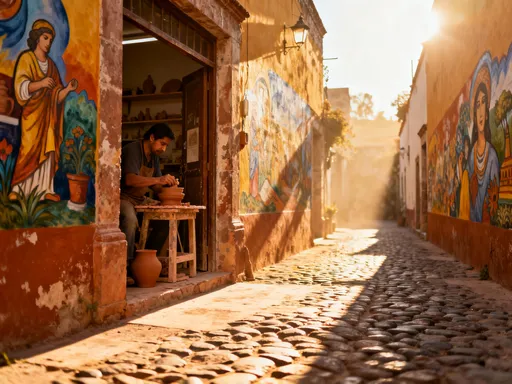
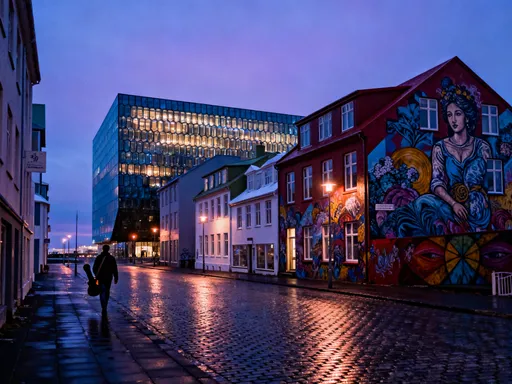
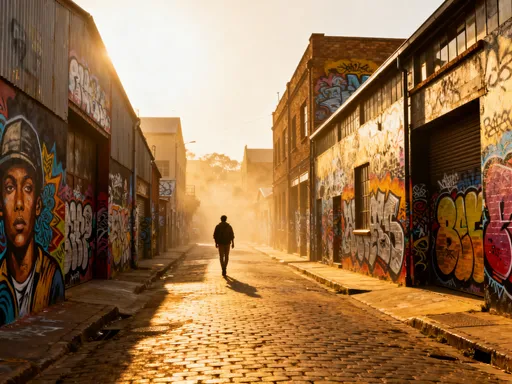
Just beyond the historic core, the neighborhood of Barrio San Pedro pulses with creative energy. Once an overlooked district, it has emerged as a canvas for Paraguay’s urban artists, where vibrant murals transform blank walls into powerful narratives. This is not graffiti for shock value, but art with intention—depicting indigenous Guarani myths, honoring national heroes, and addressing social issues like education, environmental protection, and cultural identity. For photographers, Barrio San Pedro is a treasure trove of color, emotion, and storytelling.
Walking its streets feels like flipping through an open-air storybook. One wall might feature a towering image of a woman weaving ñandutí lace, her hands glowing with golden thread. Another portrays a jaguar emerging from a storm, symbolizing strength and resilience. The contrast between the bright pigments and the faded brickwork adds visual drama, creating natural depth and texture in your compositions. Early morning light, coming from the east, enhances the vibrancy of the colors without creating harsh glare, making it the ideal time for shooting.
Engagement is part of the experience. You may encounter artists in the act of painting, their hands moving swiftly across the wall. A polite greeting in Spanish or Guarani often opens the door to conversation. Asking permission before photographing them at work is not just courteous—it builds trust and can lead to more authentic portraits. Some artists may even invite you to learn about the meaning behind their work, enriching your understanding and deepening the narrative behind your images. This is photography as dialogue, where the lens becomes a bridge between cultures and generations.
Río Paraguay Boardwalk: Golden Hour Magic
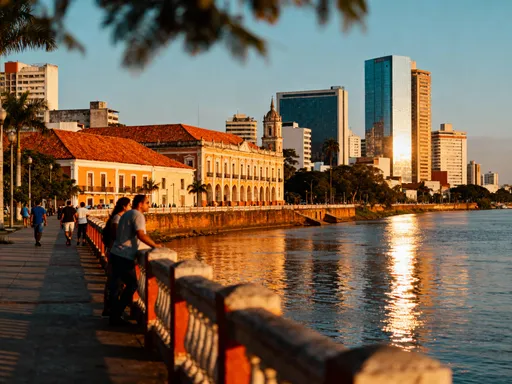
No photographic journey through Asunción is complete without a visit to the Costanera, the riverside promenade that stretches along the Paraguay River. This is where the city comes to breathe, to gather, and to celebrate the day’s end. As the sun begins its descent, the atmosphere shifts. The sky blazes with hues of orange, pink, and lavender, reflecting off the slow-moving river like liquid silk. The skyline—where colonial rooftops meet modern towers—creates a striking silhouette, perfect for long-exposure shots.
The golden hour here is nothing short of magical. With the sun low on the horizon, shadows lengthen and light softens, wrapping the scene in a warm, dreamlike glow. A tripod is essential for capturing the full beauty of this time. Use a slow shutter speed to smooth the water’s surface, turning ripples into glass. Include the movement of people—joggers, cyclists, couples walking hand in hand—as silhouettes against the radiant sky. The reflections double the visual impact, creating symmetrical compositions that feel both balanced and poetic.
As twilight deepens into blue hour, the city lights begin to flicker on. Streetlamps, building facades, and passing boats add points of light that trail across the water. This is the moment for long exposures—30 seconds or more—to capture light trails and glowing reflections. Nearby kiosks sell chipa, the beloved cheese bread, and tereré, the chilled herbal drink sipped through a metal straw. Locals gather in groups, sharing food and laughter, offering candid moments of connection and joy. These unposed scenes—children chasing bubbles, friends toasting with gourds—add warmth and humanity to your portfolio.
Local Markets: Culture in Full Color and Motion
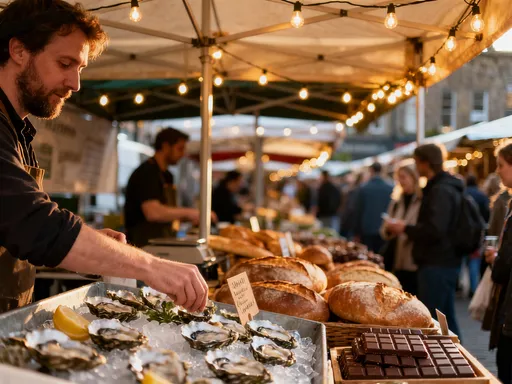
To truly understand Asunción, you must step into its markets. Mercado 4, the city’s largest public market, is a sensory explosion. The air hums with chatter, the scent of roasted meat and ripe fruit, and the rhythmic clink of knives on wooden boards. Stalls overflow with baskets of yerba mate, pyramids of dulce de batata, and bundles of fresh herbs. Artisans sit cross-legged, their fingers flying as they weave delicate ñandutí lace—a traditional craft passed down through generations. This is culture in motion, raw and unfiltered.
Photographing in such a busy environment requires both technical skill and emotional intelligence. The lighting is often uneven—bright at entrances, dim in back alleys—so using a lens with a wide aperture (f/1.8 or f/2.8) helps maintain sharpness in low light. A higher ISO may be necessary, but modern cameras handle noise well, preserving detail without sacrificing clarity. The key is to isolate your subject. A tight frame on a vendor’s hands arranging oranges, the steam rising from a pot of locro stew, or the focused expression of a lace-maker—these close-ups tell intimate stories.
Equally important is respect. Always ask before photographing individuals, especially when they are working or engaged in personal moments. A smile, a nod, a simple "¿Puedo tomar una foto?" goes a long way. Many will say yes, especially if you show genuine interest. Some may even pose proudly, hands on hips, surrounded by their goods. These interactions transform photographs from mere images into shared experiences. Beyond Mercado 4, smaller neighborhood markets offer quieter but equally rich opportunities—early-morning fish vendors, flower sellers arranging bouquets, elders bargaining over sweet potatoes. Each market has its own rhythm, its own light, its own story.
As you move through these spaces, you begin to see patterns—the pride in craftsmanship, the warmth of community, the resilience of tradition. These are not just photos of places, but portraits of a people. The market is where Asunción’s soul is most visible, where generations meet, where food and art and conversation intertwine. To photograph it well is to honor that spirit with patience, presence, and purpose.
Photographing Asunción isn’t just about locations—it’s about connection. Each spot tells a piece of Paraguay’s story, from colonial roots to modern resilience. By seeking out these cultural touchpoints, travelers gain more than images; they gain understanding. So pack your camera, respect the rhythm of daily life, and let Asunción reveal itself—one unforgettable frame at a time. This city does not shout; it whispers. And if you listen closely, through the lens of your camera, you’ll hear its heartbeat in every shadow, every smile, every sunlit street.