You Won’t Believe These Secret Spots I Found in Bagan
Bagan isn’t just temples—it’s magic at dawn, silence at sunset, and a thousand golden rooftops glowing under endless skies. I went searching for the real view, not the crowded postcard spots, and found something deeper. Hidden lookouts, quiet moments, and breathtaking panoramas most tourists miss. If you’re chasing authenticity, not just checkmarks, this is for you. Let me take you to the places that made me stop, breathe, and fall in love with Myanmar all over again.
Why Viewpoints in Bagan Matter More Than You Think
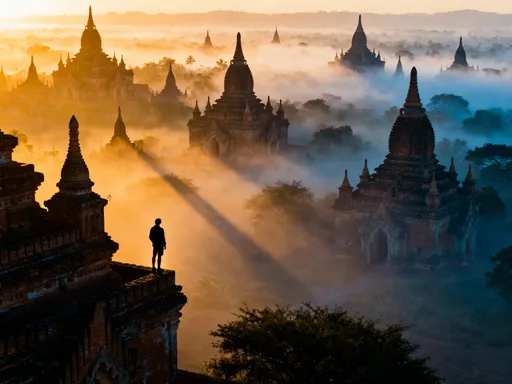
Elevation in Bagan does more than offer a better photograph—it transforms your understanding of the landscape. From the ground, temples rise as individual monuments, each with its own aura and story. But from above, a new world unfolds: thousands of stupas and pagodas scattered like offerings across an ancient plain, forming patterns only visible from height. This is not just scenery; it’s history made visible. The scale of Bagan’s spiritual ambition becomes clear when you see how temples align with cardinal points, cluster near old waterways, or mirror constellations in their placement. These were not random constructions—they were deliberate acts of faith spread across generations.
Most travelers settle for the well-known platforms at Ananda Temple or Shwesandaw Pagoda, where crowds gather like clockwork each morning and evening. While these spots offer reliable views, they come at a cost: noise, congestion, and a sense of repetition. The same photos are taken daily by hundreds, creating a kind of visual sameness that can dull the wonder. What’s often missed is that Bagan rewards curiosity. Those willing to step off the main paths—literally and figuratively—discover that true perspective comes not from popularity, but from solitude and surprise.
Private vantage points allow for a richer, more personal connection to the place. When you’re alone on a quiet terrace as mist lifts between spires, or when the first light catches a row of forgotten temples half-buried in dust, you’re not just observing history—you’re feeling it. These elevated moments become meditative, offering space to reflect on time, faith, and human perseverance. And because Bagan was once home to over 10,000 religious structures—of which around 2,200 remain—there are still countless corners untouched by mass tourism. The key is knowing where to look, and how to look respectfully.
The Sunrise That Changed Everything: My First Real View
I arrived before 5:30 a.m., guided only by the faint beam of a small flashlight and the crunch of gravel beneath my sandals. The air was cool, almost crisp, carrying the scent of dry earth and distant woodsmoke. My destination was a modest, unrestored temple tucked between two larger complexes—a place I’d learned about from a local guide the day before. There were no vendors, no tripods lined up like soldiers, no murmured conversations in a dozen languages. Just silence, and the occasional call of a rooster from a nearby village.
As I climbed the worn stone steps, I felt a growing sense of anticipation. Reaching the top, I found a flat platform just wide enough for three or four people. To the east, the horizon began to lighten, a soft blush spreading behind the silhouettes of temple spires. Then came the first golden streak—a sliver of sun piercing the darkness—and within minutes, the entire valley seemed to awaken. Light spilled over stupas, gilded chedis caught fire, and shadows stretched long across the dusty paths. It was as if the land itself was breathing.
This moment stood in stark contrast to the official sunrise spots, where large groups gather on wide terraces, often blocking one another’s views. At those sites, the experience can feel transactional: arrive, photograph, depart. But here, there was reverence. A few monks appeared silently on a nearby path, their saffron robes glowing in the dawn. One paused, looked up, and smiled faintly before continuing his alms round. That quiet exchange—wordless, unscripted—felt more meaningful than any brochure could convey.
For anyone seeking a similar experience, timing is essential. Arriving 45 to 60 minutes before sunrise allows you to navigate in near-darkness safely. Wear closed-toe shoes with good grip—the steps can be uneven and slippery with dew. Bring a light jacket; mornings are cool, especially in the dry season (November to February). Carry water and a small flashlight, but use it sparingly to avoid disturbing others or wildlife. Most importantly, move slowly and quietly. Let the morning unfold around you, rather than rushing to capture it.
Beyond the Crowds: How I Found Hidden High Ground
My most memorable views didn’t come from guidebooks or tour itineraries—they came from walking. While many visitors rely on e-bikes or horse carts to hop between major temples, I chose to explore on foot one early afternoon, following narrow dirt trails that branched off the main roads. It was slow going, but it revealed a different Bagan: one of grazing goats, children playing near village homes, and farmers guiding oxen through fallow fields. And between the clusters of well-maintained monuments, I began to notice subtle rises in the terrain—natural elevations enhanced by centuries of human activity.
One such spot was a partially restored temple, its staircase roped off but still accessible at the side. After confirming with a nearby caretaker that climbing was permitted for visitors, I ascended carefully. The structure wasn’t grand by Bagan standards, but its position offered something rare: a 360-degree view unobstructed by trees or scaffolding. To the north, I could see the Irrawaddy River shimmering in the distance. To the south, a line of temples marched toward the horizon like sentinels. Below, the patchwork of red roofs, green fields, and dusty paths looked like a living map.
Another discovery came from talking to locals. A tea shop owner near Nyaung U mentioned a small hilltop shrine used by villagers for morning prayers. He sketched a rough map on a napkin, pointing out a footpath that cut through a grove of tamarind trees. The climb took less than ten minutes, but the view was extraordinary—a west-facing perch perfect for catching the late-day light. There were no railings, no signs, no entry fees. Just a simple stone altar and a quiet bench where elderly devotees sat in contemplation.
These experiences taught me that Bagan’s true beauty lies not only in its monuments but in the spaces between them. However, it’s crucial to approach such exploration with respect. Some temples are closed for restoration or are considered sacred in ways that don’t allow public access. Always observe signage, follow local guidance, and avoid climbing structures marked as unsafe or off-limits. The goal is not to trespass, but to see with fresh eyes—within the boundaries of preservation and cultural sensitivity.
Sunset Like No Other: A Solitary Temple with the Whole Valley Below
On my fourth evening in Bagan, I found a place that felt almost secret. It was a modest temple perched on a slight rise, facing west, with a flat roof accessible by a narrow stairway. I had passed it earlier in the day and noticed no footprints on the steps. When I returned an hour before sunset, I was alone. The sky was clear, painted in soft hues of lavender and peach, and the air carried the faint scent of burning incense from a nearby village.
As the sun dipped lower, the entire valley transformed. The golden tips of stupas ignited one by one, like candles being lit by an unseen hand. Shadows stretched across the plains, merging into deep indigo pools between temple clusters. The Irrawaddy River caught the last light, turning into a ribbon of molten copper. In that stillness, with only the whisper of wind and the distant chime of a temple bell, I felt a profound sense of peace—a feeling difficult to describe, yet unmistakable in its depth.
Compare this to Shwesandaw Pagoda, the most popular sunset viewpoint. There, dozens of visitors gather on a broad platform, jostling for space, raising cameras and phones like offerings to the light. The view is undeniably beautiful, but the atmosphere is more festival than meditation. Vendors sell drinks and snacks, children run between adults, and the moment the sun disappears, the crowd disperses quickly, as if the spell is broken. While there’s nothing wrong with enjoying that energy, it offers a different kind of experience—one of shared spectacle rather than personal revelation.
The quiet temple I discovered offered something else: intimacy. It wasn’t about capturing the perfect shot, but about being present. I sat on the edge of the platform, legs dangling slightly, watching the colors deepen and fade. A single kite circled overhead, calling into the twilight. No one else came. And in that solitude, I felt a connection not just to the landscape, but to the centuries of people who had paused in similar stillness, gazing at the same sky, breathing the same air. That is the soul of Bagan—not in the crowds, but in the quiet moments between them.
Hot Air Balloons vs. Ground-Level Magic: A Real Talk Comparison
There’s no denying the allure of a hot air balloon ride over Bagan. Floating above the mist-covered plain at sunrise, watching temples emerge like islands in a golden sea—this is a vision straight out of a dream. The experience is undeniably unique, offering a bird’s-eye view that no ground-level vantage can match. Companies have operated these flights for years, and on clear mornings, dozens of colorful balloons dot the sky, creating a spectacle in themselves.
Yet, for all their beauty, balloon rides come with limitations. They are expensive—typically costing over $200 per person—and require advance booking, often months ahead. Flights are weather-dependent and only operate during the dry season. More importantly, they offer a passive experience. You are a spectator, not a participant. The journey lasts about 45 minutes, dictated by wind currents, with little control over where you go or how long you linger. And while the views are breathtaking, they lack the tactile connection of climbing a temple, feeling the sun on your skin, or hearing the rustle of leaves below.
Ground-level viewpoints, by contrast, invite engagement. They allow you to move at your own pace, to choose your moment, to return again and again. You can sit for an hour as light shifts, or climb down and explore the surrounding area. These perspectives are human-scale, rooted in the physical effort of getting there. There’s a deeper satisfaction in reaching a quiet rooftop after a walk through dew-covered grass, knowing you discovered it on your own terms.
There are also ethical considerations. Balloon operations have faced scrutiny over safety standards and environmental impact, including noise pollution that disturbs local communities and wildlife. While regulations have improved, the sheer number of flights during peak season raises questions about sustainability. For travelers seeking a more responsible way to experience Bagan’s grandeur, ground-based exploration offers a compelling alternative—one that supports local guides, reduces environmental strain, and fosters a more meaningful connection to the land.
Practical Tips for Finding Your Own Private View
Discovering your own quiet viewpoint in Bagan is entirely possible—with preparation, patience, and respect. Start by renting an e-bike, which gives you the freedom to explore beyond the main circuits without exhausting yourself in the heat. Plan to begin your outings early, either before sunrise or in the late afternoon, when temperatures are milder and crowds thinner. Carry a reusable water bottle, sunscreen, and a wide-brimmed hat to stay comfortable during longer rides.
Use minimal lighting if moving in darkness. A small headlamp or flashlight is useful, but keep the beam low and avoid shining it directly at temples or other visitors. Many travelers appreciate the darkness as part of the experience, and bright lights can disrupt both the mood and local wildlife. If you’re unsure about access to a particular structure, look for signage or ask a nearby temple caretaker. Most locals are friendly and willing to help, especially if you show respect for their customs.
Pay attention to where local pilgrims go. Their paths often lead to lesser-known but spiritually significant sites. You’ll notice worn footpaths, small offerings of flowers or candles, or the sound of quiet chanting in the early hours. Following these cues can lead to authentic discoveries without overstepping boundaries. Dress modestly—shoulders and knees covered—as a sign of cultural respect, particularly when visiting active religious sites.
Finally, remember that some temples are off-limits for climbing due to structural instability or ongoing restoration. The Bagan Archaeological Zone has clear rules, and while enforcement varies, it’s important to follow them. Climbing prohibited structures not only risks fines but also contributes to wear and damage on irreplaceable heritage. The goal is not to find the highest point, but the most meaningful one—one that allows you to see Bagan not just with your eyes, but with your heart.
The Last View: What I Took Home Beyond Photos
When I left Bagan, I carried more than photographs. I carried the memory of stillness—the way time seemed to pause as light spread across the plain, the way silence could feel so full. I carried the warmth of a shared smile with a monk at dawn, the crunch of gravel underfoot on an empty path, the scent of dust and incense lingering in the air. These are the intangible gifts of travel: not things you can hold, but feelings you carry forward.
Those quiet viewpoints taught me that perspective is more than physical elevation. It’s a state of mind. Stepping above the ordinary—whether on a temple roof or in thought—allows us to see patterns, connections, and beauty we might otherwise miss. In Bagan, I didn’t just witness history; I felt a sense of continuity, a reminder that wonder exists not in perfection, but in presence.
And perhaps that’s the greatest lesson: that the most meaningful journeys are not about checking destinations off a list, but about finding moments that change how you see the world. Bagan, in all its quiet majesty, invites you to slow down, to look deeper, to listen. It doesn’t shout its wonders—it whispers them.
If you go, don’t just chase the famous views. Seek the ones that make you pause. Find the spot where the wind carries a single bird’s call, where the light falls just right, where you feel, for a moment, completely alone with something eternal. That is where Bagan reveals itself—not in the crowd, but in the quiet. Not in the photograph, but in the breath you forget to take. Go not to see, but to feel. And let the temples, in their thousand silent ways, show you the way home.